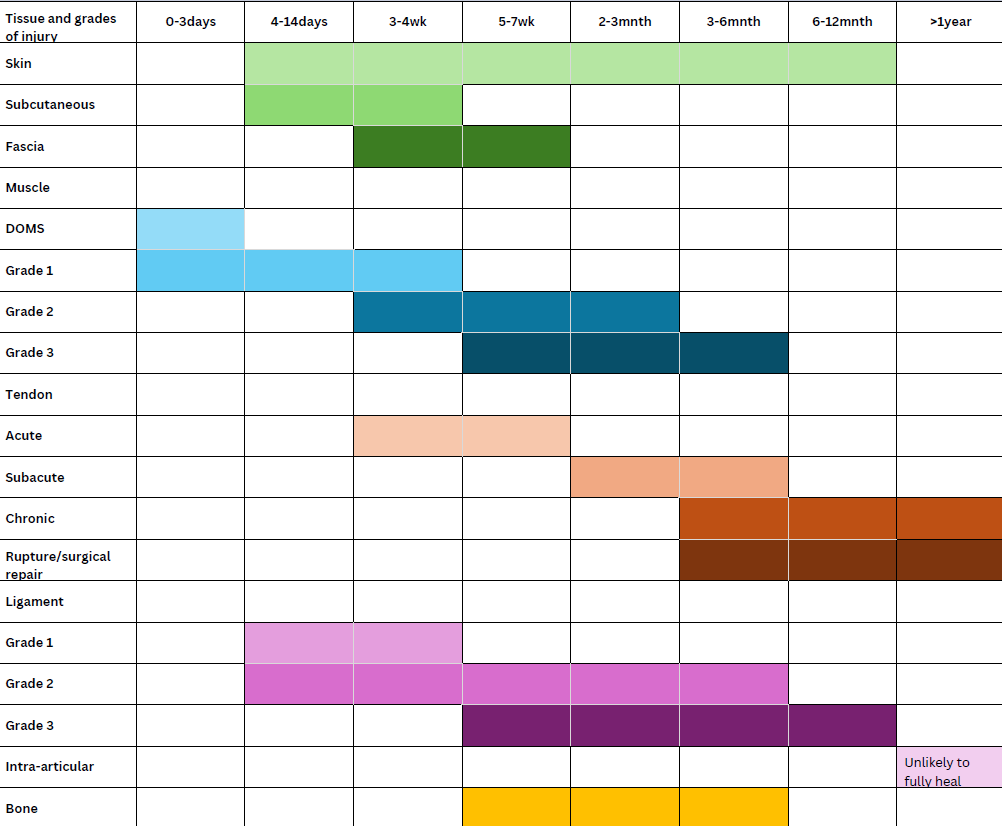
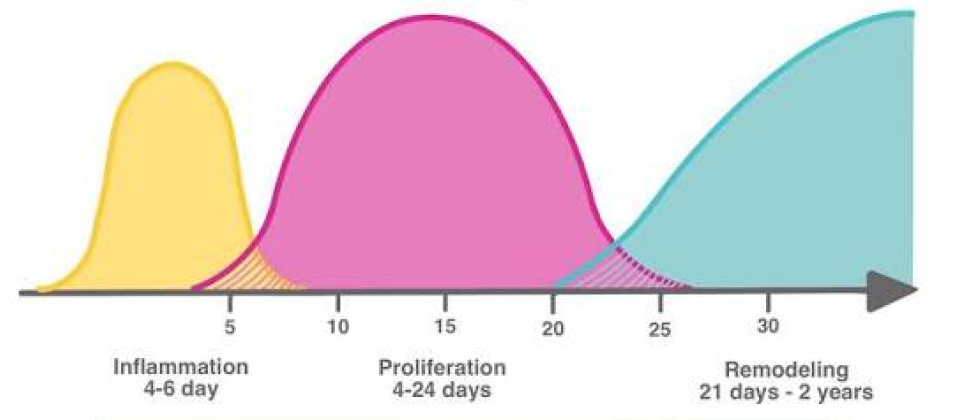


Approximate rates of Tissue Healing

The rate of healing is influenced by the degree of tissue damage.
Muscle:
Grade 1
- mild damage (<5% of fibers) , minimal loss of strength and function
Grade 2
- moderate fiber damage, loss of strength and function
Grade 3
- complete rupture of muscle/muscle-tendon and loss of function
Ligament:
Grade 1 - streched, little/to no tear, no joint instability
Grade 2 - partial tear, mild instability
Grade 3 - complete rupture, loss of funtion
Stages of Wound Healing

1. Inflammation (Clearing Debris)
During this phase, blood vessels expand, allowing oxygen and white blood cells (macrophages) to rush to the site to combat bacteria and remove necrotic tissue. This process begins within a few hours and can persist for several days. Symptoms such as redness, swelling, warmth, and pain are normal physiological responses at this stage.
2. Proliferation (Building New Tissue)
The body shifts its focus to rebuilding. New blood vessels are formed (angiogenesis), and fibroblasts generate collagen, providing a framework to fill in the wound. The edges of the wound gradually contract, while new skin cells begin to cover the area. This phase can last from a few weeks to as long as a month. Signs of healing include a wound bed that appears pink or red and has a bumpy texture (granulation tissue).
3. Remodeling (Maturation)
In this phase, collagen is reorganized to enhance the tensile strength of the developing skin. The new tissue continues to mature, resulting in a scar that becomes flatter and less pigmented. This stage typically starts around week three and can extend from 3 to 12 months. The final outcome is that the healed skin will achieve about 80% of the tensile strength of the original tissue.